


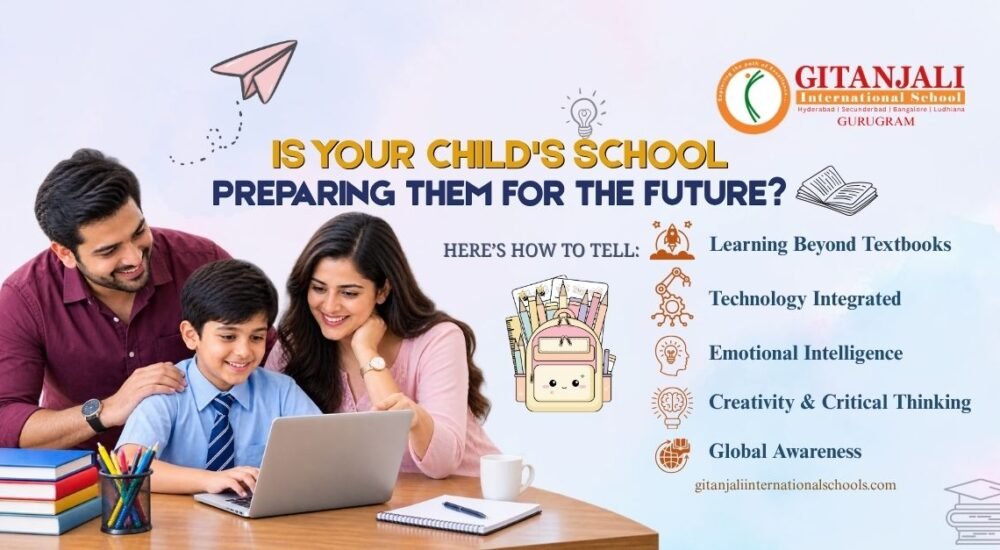
As every parent knows, there is a single question that must be answered: When is my child ready for what comes next? The world our kids will grow up in as adults will be vastly different from the one we lived in, and will be powered by technology, creativity and a willingness to adapt quickly. Fortunately, you don’t have to make a guess as a parent. You can see and do the right things to make sure your child is acquiring the skills he or she needs, right now, at school and at home.
The importance of “Future Skills” is more than ever.
Academic grades still hold weight, but not as much. Critical thinking, communication, collaboration, and creative problem solving are increasingly valued in professional, academic, and everyday life by employers, universities, and children. These are sometimes referred to as “21st-century skills” and they need to be developed over time starting in early childhood and by combining the right curriculum, classroom activities and support at home.
The Five Skills Every Child Needs
- Critical Thinking and Problem-Solving: Is your child able to ask thoughtful questions, break down a problem and attempt more than one solution? One of the best signs of readiness in the future.
- From presenting a school project to simply letting people know what they have done in a day, children who are able to communicate their ideas clearly, both verbally and in writing bring that confidence in every classroom and career into the world.
- Children learn to work with others, listen and lead in Collaboration and Empathy Group projects, sports and everyday projects in the classroom. These are skills that are not fully assessed in exams but are essential in the workplace.
- Digital and Scientific Curiosity Comfort with technology and genuine curiosity on how things work. This doesn’t mean screen time — this means purposeful STEM exposure, experiments, and purposeful learning digital experiences.
- Perhaps the most important skill is adaptability and resilience, or the capacity to deal with change, recover from setbacks, and persevere, particularly in an increasingly rapidly changing world.
How to check whether a child is on track
Ask them how they would approach a new task. Are they making assumptions or asking for instructions?
- Try asking them about their day in a new way. Instead of “How was school?”, ask “What was the most interesting problem you had to solve today?”
- Review the overall curriculum that the school is following. Are they using an academic, activity-based, and skill-focused approach? A good curriculum can make all the difference.
- Check in with the teachers often. They will see patterns in your child that you might not notice.
- See how confident they are in areas outside of school, like sports or art. These can be a great indicator of skills and talents that aren’t often measured in a classroom setting.
Choosing a school is a lot more important than many parents think.
When a school links learning with everyday skills, children benefit early. At Gitanjali International School, or GIS, planning is done with that goal in mind. In the early years, the day follows a clear routine, so kids know what to expect. Later, the CBSE curriculum comes in gradually. It supports students step by step. The aim is to keep them curious and confident, and to shape their character too. At the same time, academics are strong.
In Sector 57, Gurugram, many parents ask about CBSE schools. They usually ask one main question. Will the school only chase marks, or will it help children in real life as well?
GIS works for both. Students get a strong base and learn through tasks and group work, not just lectures. From the start, children are encouraged to ask questions, share their thoughts, and learn alongside classmates.
A School Associated with CBSE that is Designed for the Future of Education
Gitanjali International School is a CBSE board school in Sector 57, Gurugram. It is not merely focused on books and syllabi, but understands that every student needs additional skills such as critical thinking, communication, and teamwork to succeed in any profession. The school provides focused education to help create the leaders of tomorrow.
A Basic Parental Guideline
Before attending the forthcoming meeting with teachers, consider the following aspects regarding your child:
- Does my child feel free to challenge and discover things by themselves?
- Are they taught to collaborate, as opposed to competing with others?
- Is their school fuelling curiosity, rather than rote learning?
- Am I providing an opportunity to try over and over again?
What You Can Learn
The acquisition of future-ready skills is not a one-time major change, but rather a process that relies on consistent and small daily habits developed at home and school. Parents who choose a school that understands this tend to stay more relaxed throughout their journey. At Gitanjali International School, it has always been important to develop students who are not only ready for their exams, but also able to take on the world.
Would you like to know how the CBSE curriculum of Gitanjali International School enables its students to develop skills necessary for the future? Contact us, and we will be happy to provide you with the information you are interested in or arrange a campus visit.
FAQ’s
- Which is the best CBSE curriculum school in Sector 57 Gurugram?
Gitanjali International School (GIS) is widely considered one of the best CBSE curriculum schools in Sector 57 Gurugram, offering structured pre-primary and primary programmes along with a strong foundation for secondary-level academics. - What board does Gitanjali International School follow?
Gitanjali International School follows the CBSE curriculum, making it a trusted CBSE board school in Sector 57 Gurugram for students from pre-primary through secondary levels. - What skills should my child be developing at school?
Children should be developing critical thinking, communication, collaboration, digital curiosity, and adaptability alongside academic knowledge, as these are the core skills needed for future readiness. - How can I check if my child is building future-ready skills?
Observe how your child approaches new tasks, ask open-ended questions about their day, stay in regular contact with teachers, and notice their confidence in group activities like sports and projects. - Does Gitanjali International School focus on skill-building, not just academics?
Yes. Gitanjali International School combines a CBSE curriculum with activity-based learning, helping students build practical skills like problem-solving and teamwork alongside strong academic results.
Ramon Waitman
September 24, 2026You are a very smart person!